Support for concrete slab foundations
Slab Foundation Repair in North Texas
A property-specific approach to slab support, access planning and the questions behind a repair proposal.
Explore this service
Looking beneath a flooring symptom
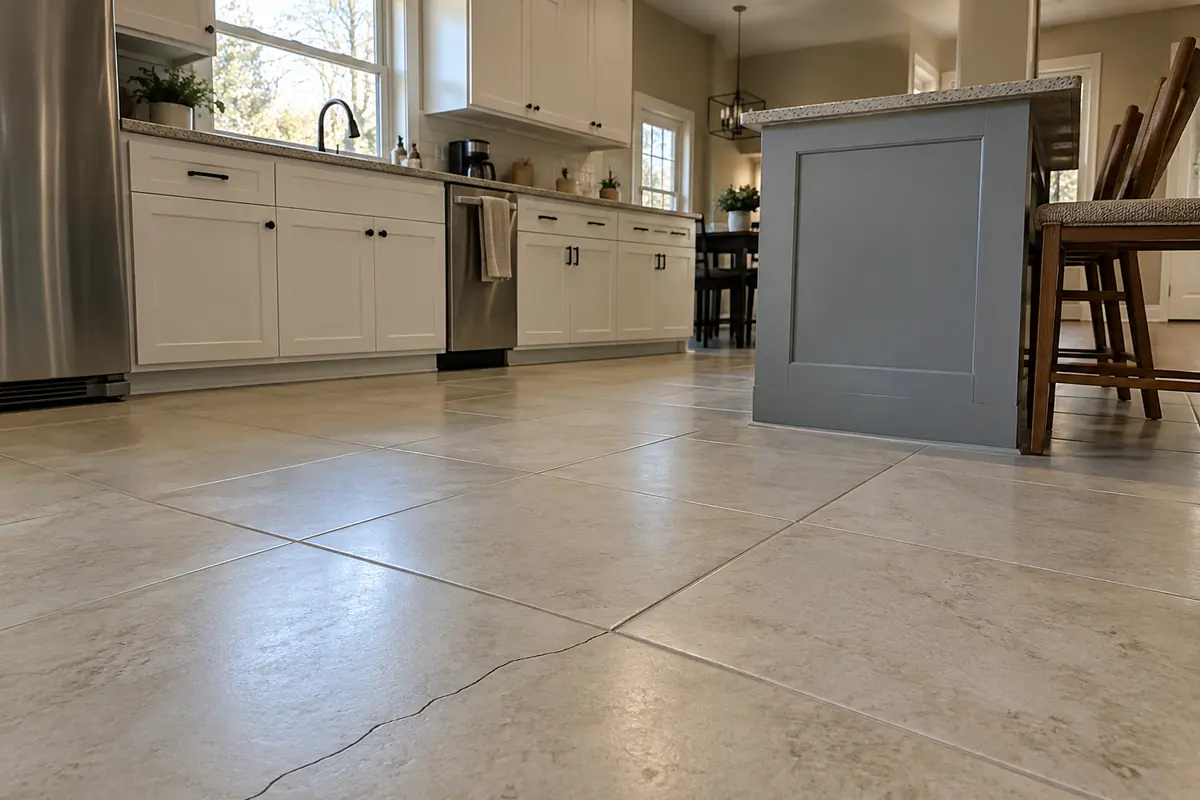
Call a foundation repair company when cracked tiles appear alongside changing floor levels, new door problems, wall cracks or other signs that the structure may need evaluation. A crack crossing several tiles or returning after repair also deserves a closer look, but it does not prove foundation movement. Tile, installation materials and the surface beneath them can each contribute to cracking. The goal is to identify the cause before paying to replace the same floor again.
One chipped or cracked tile near a spot where a heavy object fell presents a different question from a line continuing through several tiles and grout joints. Start by recording what you can see without removing anything. Does the line stop at one tile? Does it continue into another room? Is there a noticeable change in height along it?
These observations help a professional decide what to examine; they are not a homeowner scoring system for foundation damage. Even a continuous crack can have more than one explanation. Foundation Performance Association guidance identifies tile damage and installation-related stresses among conditions that can be mistaken for foundation movement. The pattern should guide the investigation rather than settle it.
Look for changes that appeared around the same time: a door that now rubs, a new wall crack, a trim gap or a floor area that feels different underfoot. Record the locations and approximate dates. Several observations in the same part of the house may make a foundation assessment more useful, but they still need to be considered together by the inspector.
Include what has stayed the same. If the doors work normally and the tile crack appeared immediately after a known impact, say so. If you have lived with the same grout line for years without change, distinguish it from a new crack. An accurate history is more helpful than collecting every old imperfection as though it appeared this week.
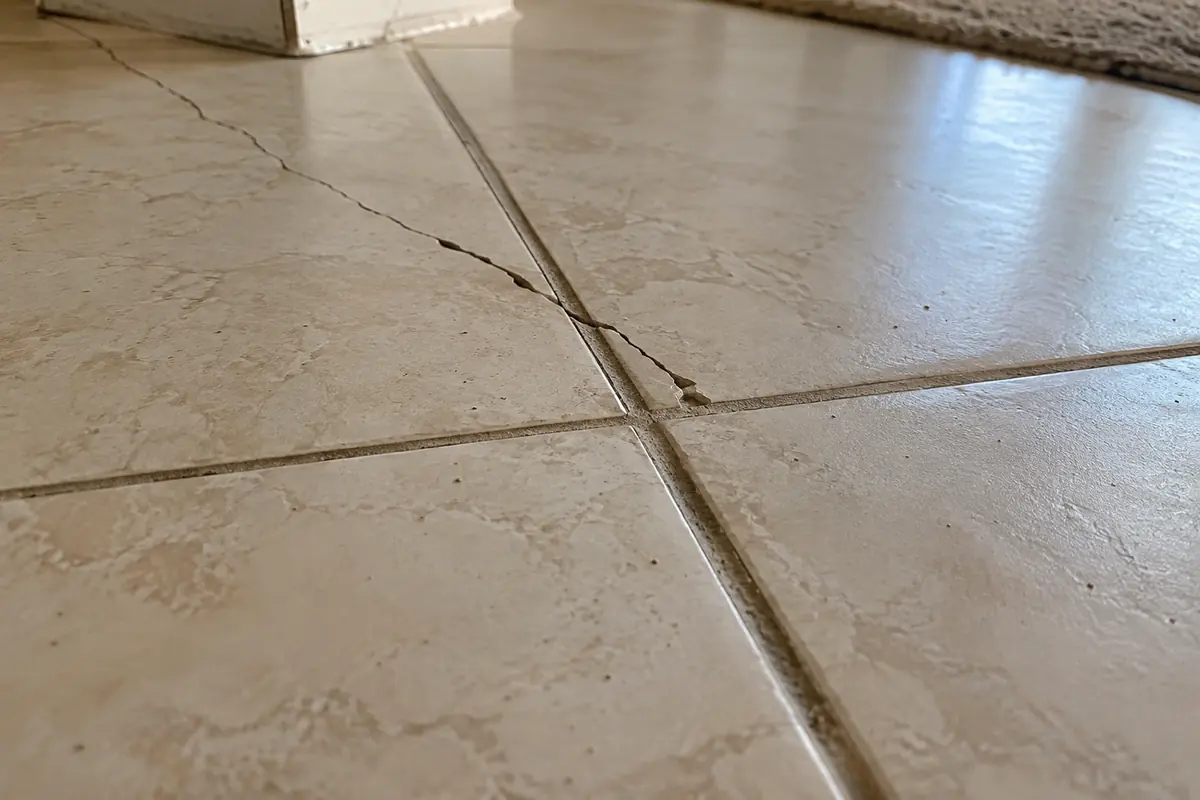
For isolated damage with a clear flooring-related history, a qualified tile installer may be the most direct first call. That person can assess the tile assembly and explain whether the condition points to a question outside the flooring scope. A foundation visit becomes especially useful when the tile concern is part of a broader pattern of structural symptoms or a reported change in floor profile.
Sometimes the work needs both perspectives. A foundation contractor can assess visible conditions and elevations, while a flooring professional evaluates the tile installation and requirements for replacement. Ask each to explain what their findings establish and what they do not. Replacing tile cannot correct a foundation support problem, and a foundation repair does not resolve every possible installation problem.
Take wide photographs of the room and close photographs of the crack, including where it crosses grout lines or changes direction. Note when the tile was installed, whether the area has been repaired before and whether plumbing or remodeling work occurred nearby. Keep installer invoices, spare-tile information and previous foundation records together.
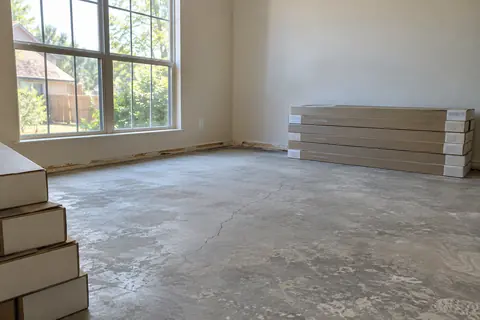
If flooring removal is already scheduled, tell both contractors before the work begins. The exposed surface may provide useful information, but any further investigation should be planned. Do not cut into the slab to follow a crack. Where a house has a post-tension foundation, proposed slab penetrations require particular attention to the existing tendon system.
If foundation repair is recommended, clarify the structural work and any access locations before finalizing the flooring plan. An interior support location could affect the part of the floor you were about to replace. The foundation contractor and flooring installer should understand the scope, handoff and conditions required before finish installation proceeds.
A recurring tile crack deserves the same careful approach. Find out whether the previous work only replaced the tile, addressed the surface beneath it, or included foundation repair. Those are different histories. Ask what the new recommendation will do differently and how the evidence supports it. Neither another patch nor a new foundation proposal should skip that explanation.
There is no need to wait for more tiles to crack if you are already noticing related changes. Equally, an isolated tile problem does not require assuming the whole house needs repair. Describe the pattern, share the timing and ask which evaluation will help resolve the uncertainty. That gives the next professional a focused starting point.
Pro-Tech provides no-cost initial in-person foundation inspections within our North Texas service area. If your tile damage accompanies floor changes, wall cracks or sticking doors, send the property address and a short description. Our staff will confirm service availability and arrange an appointment to review the foundation concern before you commit to new finishes.
Straightforward answers
No. Grout and tile distress can involve the flooring installation or the surface beneath it. Consider the pattern, history and surrounding conditions before deciding whether foundation repair is involved.
Damaged tile usually remains a separate finish-repair question. Ask what restoration is included in the foundation scope and coordinate any replacement with the flooring installer after the structural plan is clear.
Tell us what you have noticed. We will help you take the next step.
Keep exploring
Relevant services and practical guidance for the questions that come next.
A property-specific approach to slab support, access planning and the questions behind a repair proposal.
Explore this serviceLook at patterns and changes together before drawing conclusions from a single crack.
Read the guideUnderstand the difference between a foundation support problem and a tendon problem before agreeing to a repair.
Read the guideResolve unexplained movement and coordinate repair access before investing in a finished floor.
Read the guideLet's take a closer look
Tell us a little about your property. Our team will contact you to arrange your no-cost initial inspection.
(972) 288-3797Monday to Friday, 8:30 AM to 5:30 PM