Start with the property
Foundation Inspections in North Texas
Understand visible changes, gather useful measurements and discuss the next step for your property.
Explore this service
Start with where the water goes
Pro-Tech installs French drains and related drainage components for North Texas properties to collect water and route it to an appropriate outlet. We begin with a site analysis, then plan the collection points, pipe route and discharge together so the installation addresses the observed water problem.
No-cost initial inspection. Our team contacts you to arrange a time.
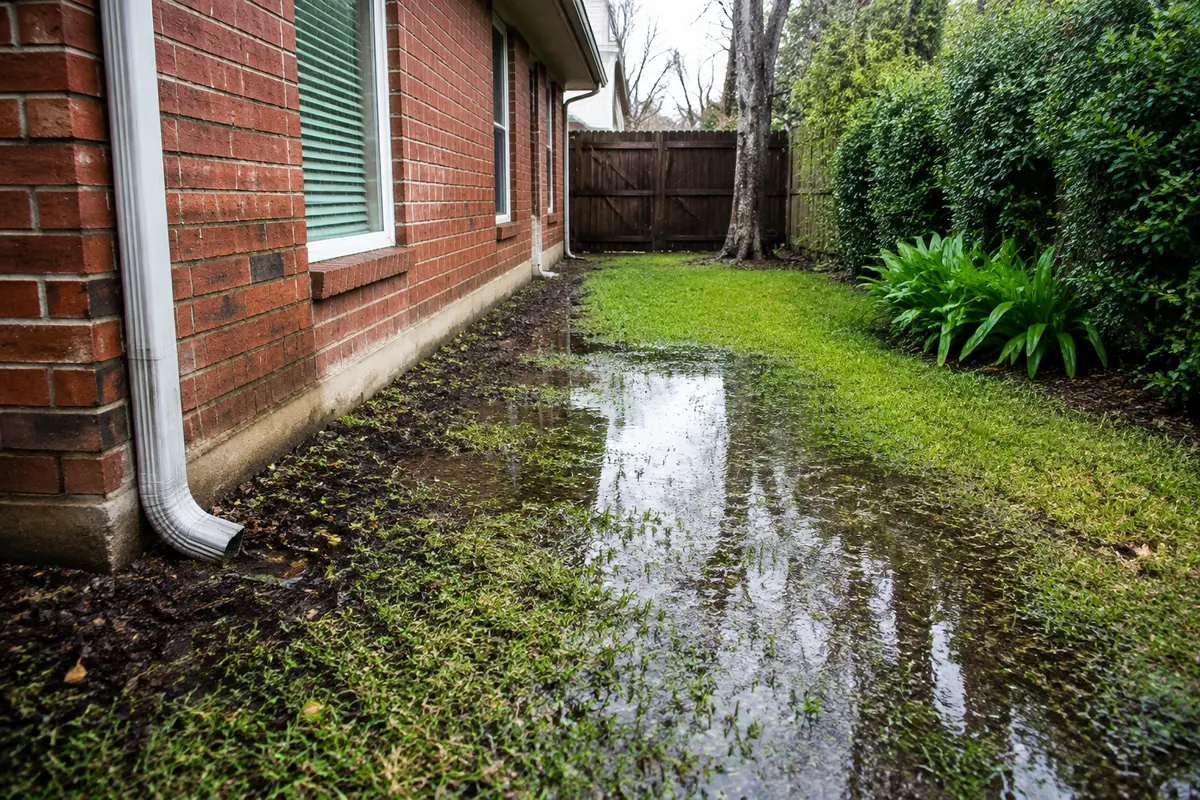
Our drainage assessment looks at where water collects and how it reaches that location. Roof runoff, surface flow and water within the ground enter a system in different ways. The source and route determine what the proposed installation needs to collect.
Your observations after rain help explain a pattern that may not be visible during a dry visit. Show us the affected wall, yard or paved area and any obvious downspout discharge. We connect that information to the site layout before selecting a route or proposing components.
A French drain uses a buried collection arrangement rather than relying only on an opening at the ground surface. Water passes through a free-draining gravel zone and enters a perforated pipe, which carries it toward an outlet. The pipe openings and surrounding drainage material are what distinguish it from a solid pipe used simply to convey collected water.
Surface catch basins collect water at defined inlet points. A downspout connection receives roof runoff. These components can be combined in a drainage plan, but they perform different jobs. We explain which parts fit the observed problem and how they connect.
Our installation work can include trench excavation, drainage pipe, downspout connections and catch basins as specified for the property. The planned outlet is part of the system from the beginning. Water needs a workable destination, not merely a new place to accumulate at the end of a pipe.
Where water must move from a low collection point to a higher exit, a sump pump may be required. That adds power, service access and maintenance considerations. The proposed route also needs the relevant permissions and local requirements checked before installation is finalized.
Walk through the proposed trench path and identify paving, landscaping, gates, irrigation and other features along it. Discuss utility-location coordination and any known private lines. Tell the team about buried features you know of, but do not attempt to expose or relocate them yourself.
Ask what the scope includes for excavation, surface restoration and disposal of removed material. If the route crosses a driveway or patio, make sure the treatment of that surface is explicit. Agree how access will be managed while the work area is open and which preparation tasks are your responsibility.
The visible inlets and outlet are useful maintenance points: they allow the owner to notice debris, blockage or a change in flow. A system with a pump also has operating and service needs. We discuss those features with the selected installation so the owner knows which parts need ongoing attention.
Keeping a record of the route helps with later landscaping or concrete work. New planting, paving or stored material should not unknowingly block a collection point or outlet. Drainage correction addresses the water route identified in the scope; a separate foundation concern still needs its own assessment.
Bring observations rather than a predetermined pipe layout. The initial visit can help separate the symptoms from the proposed work and identify questions that need to be resolved before installation. If foundation support or concrete repair is also discussed, ask for those scopes to be stated separately.
Request a no-cost in-person inspection through the form or call (972) 288-3797. Include the complete property address and explain where water collects. The team contacts you to confirm eligibility and arrange a visit. Photos can support that conversation, but the appointment is arranged after the team reaches you.
Straightforward answers
A drainage installation and foundation repair address different objectives. Discuss both concerns if they are present; do not assume one service replaces the need to assess the other.
The outlet needs a property-specific review. Boundaries, permissions and applicable requirements matter. Do not select a discharge route solely because it appears to be the lowest nearby point.
These resources provide background. Recommendations for your property require an on-site assessment.
Tell us what you have noticed. We will help you take the next step.
Keep exploring
Relevant services and practical guidance for the questions that come next.
Understand visible changes, gather useful measurements and discuss the next step for your property.
Explore this serviceDefine a patio's footprint, doorway transitions, water route and work access before installation.
Explore this serviceA property-specific approach to slab support, access planning and the questions behind a repair proposal.
Explore this serviceLet's take a closer look
Tell us a little about your property. Our team will contact you to arrange your no-cost initial inspection.
(972) 288-3797Monday to Friday, 8:30 AM to 5:30 PM