Start with where the water goes
French Drain Installation in North Texas
Evaluate the water source, collection points, discharge route and maintenance questions before installation.
Explore this service
Choose the right drainage approach
Surface drains capture runoff through an opening at the ground surface. A French drain uses a permeable drainage assembly, commonly gravel and perforated pipe, to intercept water reaching that assembly. The distinction is how water enters. Conveying pipes and an outlet then carry collected water away, and some site plans combine the two collection functions.
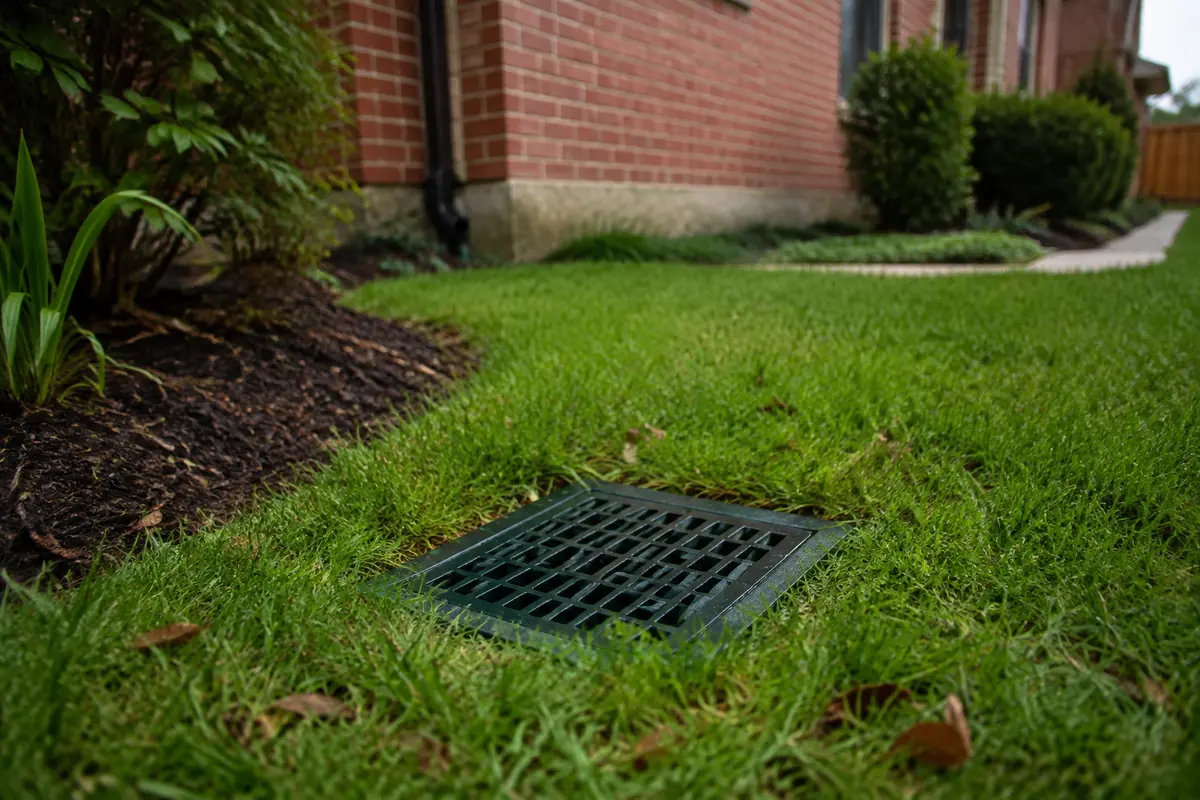
Picture runoff crossing a patio and collecting at one low edge. A surface inlet or channel provides an opening where that flow can enter a drainage system. Its position matters because water must reach the opening rather than pass it or collect behind another obstacle. The grate is the visible collection point; the connected route and outlet are still essential parts of the installation.
Leaves, mulch, and sediment can obstruct a surface opening, so accessible debris removal is part of maintenance. A new inlet should remain visible and reachable after landscaping. A surface-drain proposal needs to account for the surrounding elevations and water route, not simply place a grate where a puddle was photographed once.
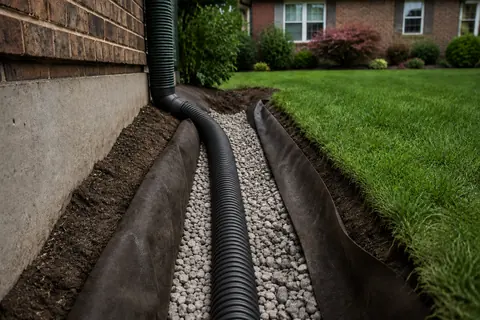
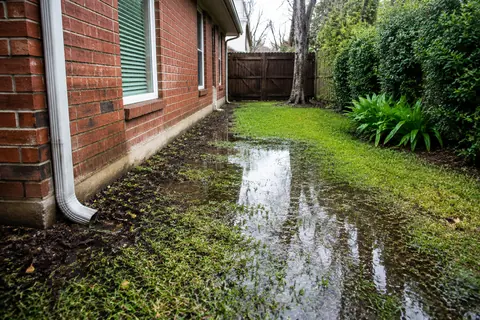
Picture a consistently wet strip of ground where water can enter a buried drainage zone. The surrounding drainage material provides a path toward perforations in the collecting pipe. University of Minnesota Extension describes this basic French-drain arrangement. The source discusses a different site context, so its construction dimensions and placement recommendations should not be treated as a design for your yard.
A French drain's buried collection path is less visible than a grate. The installer must account for soil and sediment management, the route, and access for future evaluation. A pipe designed to convey water from one point to another has a different role from the perforated collection section, even when both are part of the same project.
These are common functional distinctions, not rigid product labels. An exposed drainage strip may intercept some surface water, and a project may combine inlets with a subsurface assembly. The plan should show how each source reaches the intended collector. That is more informative than relying on the name 'French drain' for every buried drainage installation.
Both approaches need a suitable discharge plan. Ask where the water goes, what site conditions allow that route, and what local coordination is required. A system that collects water successfully but has an unsuitable destination leaves an important part of the problem unresolved. Confirm the outlet location in the written scope.
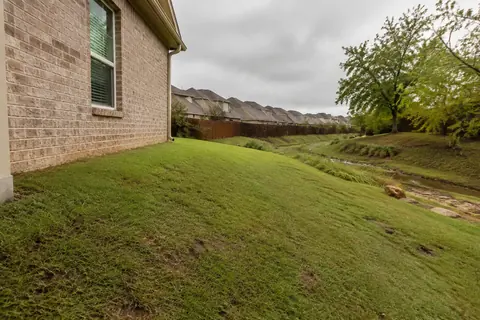
Also discuss grading, downspouts, planting beds, and hard surfaces. EPA moisture guidance treats site drainage as part of building water management, which is why a drain should be considered within the whole layout. If a surface feature directs water toward the house, ask whether that feature needs attention as part of the project.
A useful comparison includes the problem being addressed, collection points, route, outlet, excavation, restoration, and maintenance access. Ask what the system cannot address, including unresolved leaks or building water-entry defects. Avoid assuming that the longest trench or the most inlets necessarily make the best design for the property.
Pro-Tech provides French drain installation and can discuss the site conditions behind your drainage concern. Call 972-288-3797 or submit the property information for a scheduling call. Bring a sketch of existing drains and photographs of the water pattern so the discussion begins with what needs to be collected and where it can go.
Straightforward answers
Neither is universally better. The appropriate collection method depends on the water source, site layout, and discharge plan.
It may, when the design calls for different collection functions. Ask how the components connect, what each addresses, and how the combined system will be maintained.
Tell us what you have noticed. We will help you take the next step.
Keep exploring
Relevant services and practical guidance for the questions that come next.
Evaluate the water source, collection points, discharge route and maintenance questions before installation.
Explore this serviceA French drain needs a collection path and a suitable outlet to perform its intended job.
Read the guideA slope moves water somewhere; the destination must be part of the plan.
Read the guideLet's take a closer look
Tell us a little about your property. Our team will contact you to arrange your no-cost initial inspection.
(972) 288-3797Monday to Friday, 8:30 AM to 5:30 PM