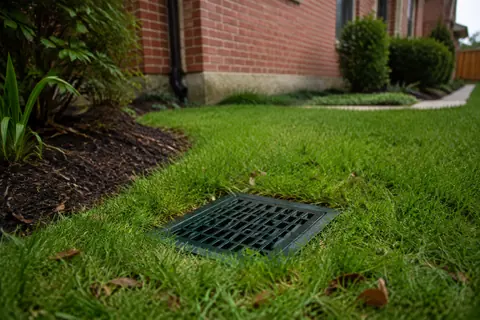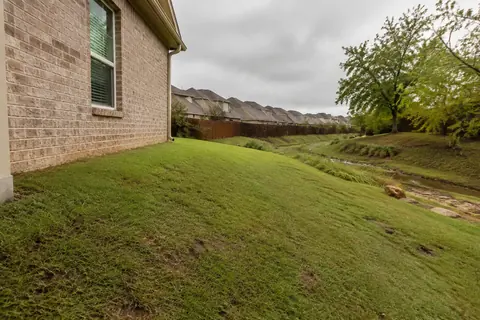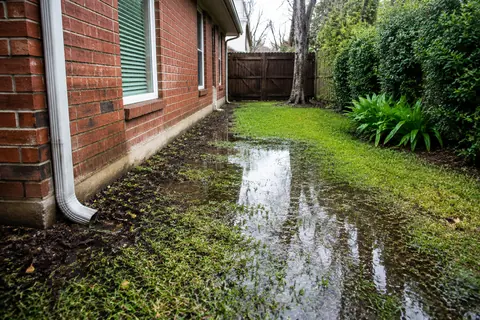
Start with where the water goes
French Drain Installation in North Texas
Evaluate the water source, collection points, discharge route and maintenance questions before installation.
Explore this service

Side-yard drainage
The rain has stopped, the driveway is drying, and the narrow strip between your house and the next one is still soggy. That low area may be receiving runoff from several directions while offering very little room for water to escape. Finding the route matters more than starting with a particular drain product.
Roof downspouts, adjoining pavement, and the slopes around both buildings can feed a side yard. A fence base, raised planting bed, or recently added edging may interrupt the route that water previously followed. The deepest puddle shows where water collects; it does not necessarily show where the problem begins.
A shallow surface channel, called a swale, may be part of the intended drainage layout. Department of Energy guidance recognizes swales or drains as options where limited space constrains grading away from a foundation. Whether either fits your property depends on the elevations and the available outlet.
From a safe, dry location, take a wide photograph showing the passage and both ends of the wet area. Note when the rain ended and how the area changes afterward. A second photograph from the same spot can help explain whether the water clears or keeps returning.
Include recent changes in the conversation, even if they seemed minor at the time. A patio extension or new landscape border may help explain a changed water path. Stay on your own property unless your neighbor has agreed to access, and keep observations separate from assumptions about who caused the problem.
A drainage proposal should identify how water will be collected, carried, and discharged. Adding gravel or burying a pipe does not, by itself, establish a working outlet. Ask the contractor to explain the complete route and whether grading, surface collection, or another approach addresses the observed conditions.
If the proposal involves a shared area, neighboring land, or a public drainage connection, establish the necessary permissions and local requirements before work begins. Moving water out of one low spot should be considered alongside its effect on the surrounding property.
Pro-Tech can review drainage concerns around your home and discuss an appropriate scope. Send the property details and describe when the side yard holds water so the scheduling team understands the concern.
Tell us what you have noticed. We will help you take the next step.
Keep exploring
Relevant services and practical guidance for the questions that come next.
Evaluate the water source, collection points, discharge route and maintenance questions before installation.
Explore this serviceStart with what water needs to be collected and where it can discharge.
Read the guideA slope moves water somewhere; the destination must be part of the plan.
Read the guideLet's take a closer look
Tell us a little about your property. Our team will contact you to arrange your no-cost initial inspection.
(972) 288-3797Monday to Friday, 8:30 AM to 5:30 PM