Start with where the water goes
French Drain Installation in North Texas
Evaluate the water source, collection points, discharge route and maintenance questions before installation.
Explore this service
After a storm
A heavy-rain drainage record is most useful when it shows three stages: the site's ordinary layout before rain, the water route during the event, and what remains afterward. Each stage answers a different question. Observe only from safe locations; entering floodwater or approaching electrical hazards is not part of the inspection.
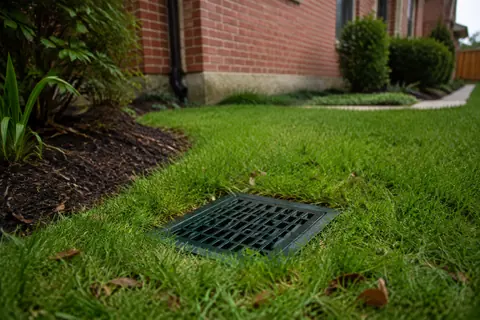
On a safe dry day, photograph downspout ends, visible drain inlets, low areas, patio edges, and the route beside the house. This baseline makes later rain photographs easier to interpret. It also identifies objects that may alter flow, such as stored materials or freshly placed mulch, without requiring you to create an artificial water test.
Record recent site changes. A new fence base or patio may matter because the next storm will show water moving through a changed layout. Mark the date of the alteration and keep the plan if one exists. The before-rain record describes the route available to water; it does not predict how much water the site can handle.
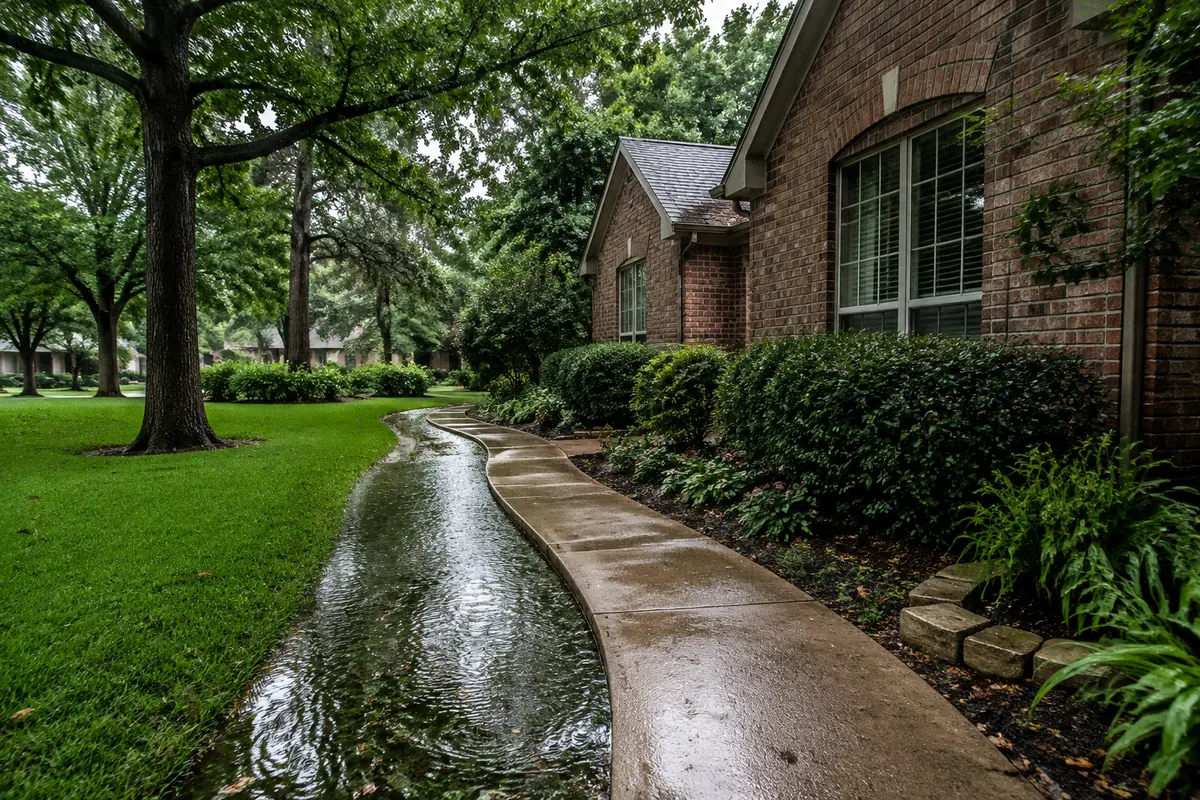
From a sheltered safe position, observe where water first enters the affected area and how it travels. A short video can show the direction better than a still photograph: roof discharge entering a bed, runoff crossing a walkway, or several streams converging in a side yard. Keep yourself out of moving water and away from electrical equipment.
The during-rain record answers the source question. A puddle photographed later may show only the destination, while the earlier video shows whether roof runoff, paving, or another route fed it. Note whether rain was still falling and avoid drawing conclusions from a close-up that excludes the incoming flow. You do not need to estimate intensity or system capacity to provide useful evidence.
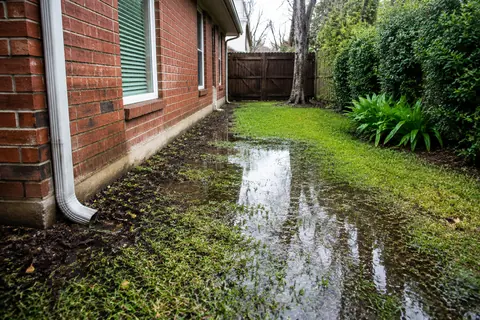
When conditions are safe, return to the same viewpoints and note where water remains or where sediment and debris show a flow path. Record the time since rainfall stopped, if known. A sequence of comparable images lets the drainage professional distinguish active storm flow from water persisting in a particular location afterward.
Report water entry into the building as its own concern and arrange appropriate prompt help for the source and affected materials. If cracks or opening changes were also noticed, document them separately for a foundation review. The storm record supplies site information; it does not by itself prove that rain caused a structural change.
Bring the three stages together for the appointment. A dry-day overview, a safe storm video, and an after-rain image can explain much more than a folder of unrelated puddle photographs. The professional can then review collection and discharge options using the route that was actually observed.
A useful proposal identifies the water source, collection method, route, discharge destination, and maintenance access. Ask whether the concern involves surface runoff, below-ground moisture, or both. A French drain may be appropriate for some conditions, while another layout or surface collection method may fit others. The name of a system should follow the problem it is designed to address.
Pro-Tech provides French drain installation and can discuss site drainage concerns. Call 972-288-3797 or submit the property information for a scheduling call. Share the storm photographs and known existing drain locations so the review can account for the water route you actually observed, including where it leaves the property.
Straightforward answers
Not necessarily. The source, duration, site layout, and available discharge route should be reviewed before selecting a collection system.
Do not improvise excavation in hazardous weather or around unknown utilities. Document from safety and arrange a planned review once access is appropriate.
Tell us what you have noticed. We will help you take the next step.
Keep exploring
Relevant services and practical guidance for the questions that come next.
Evaluate the water source, collection points, discharge route and maintenance questions before installation.
Explore this serviceStart with the source and destination of the water, not a drain product.
Read the guideStart with what water needs to be collected and where it can discharge.
Read the guideLet's take a closer look
Tell us a little about your property. Our team will contact you to arrange your no-cost initial inspection.
(972) 288-3797Monday to Friday, 8:30 AM to 5:30 PM