Start with where the water goes
French Drain Installation in North Texas
Evaluate the water source, collection points, discharge route and maintenance questions before installation.
Explore this service
Drainage explained
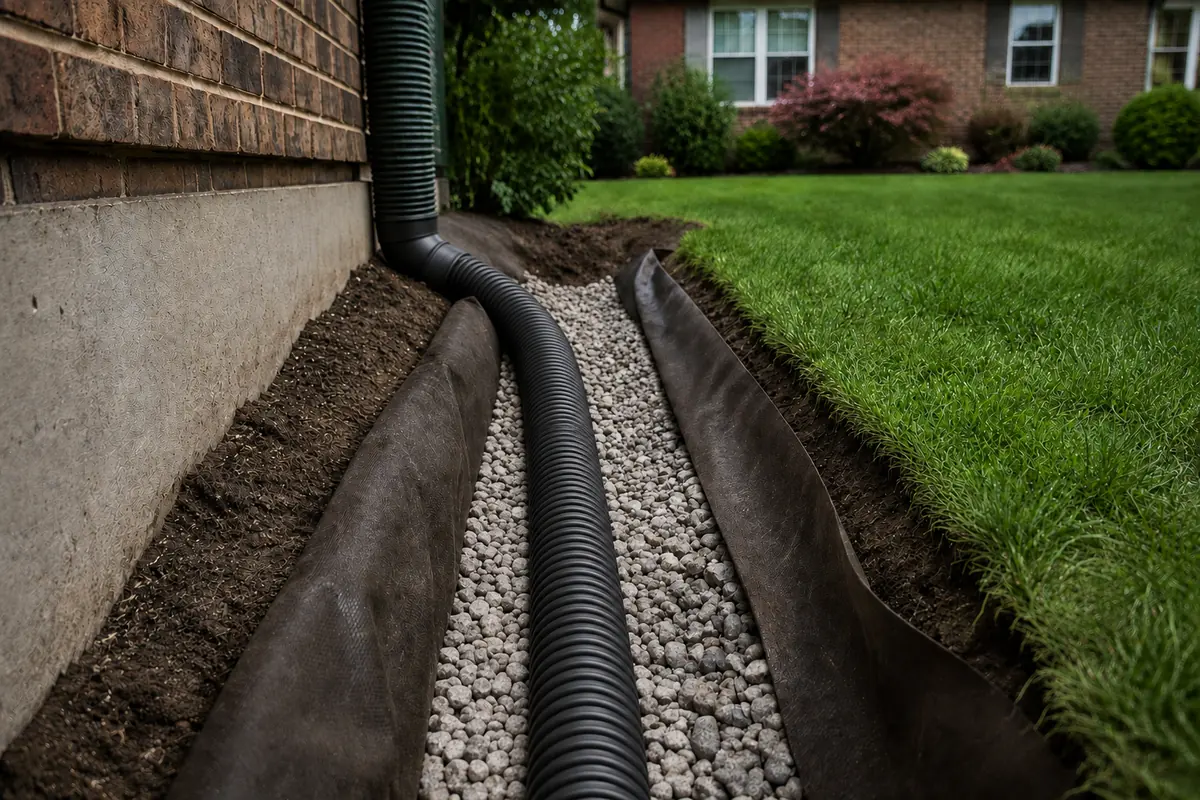
A French drain commonly combines a trench, drainage material, and a perforated pipe to collect water and carry it toward an outlet. The details depend on the site and the water problem. Understanding the basic parts helps you ask whether the proposed system fits your property and what other work may still be needed.
The drainage assembly must be positioned where it can intercept the water it is intended to collect. University of Minnesota Extension describes the basic use of free-draining material and a perforated pipe in a French drain. That background explains the collection concept; it does not establish a trench depth, route, or design for a North Texas home.
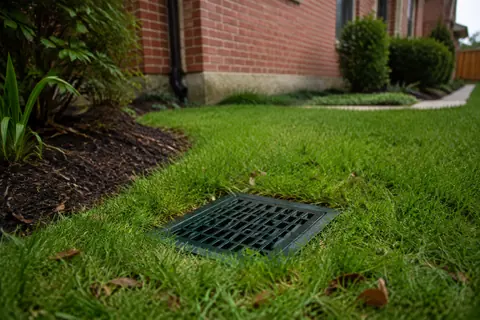
Ask the contractor which water source the proposed installation addresses. Persistent wet soil and fast runoff crossing a patio may call for different collection arrangements. If surface inlets are included, ask what they contribute and how they connect. A drawing should make each component's function understandable without requiring you to interpret buried pipe terminology.
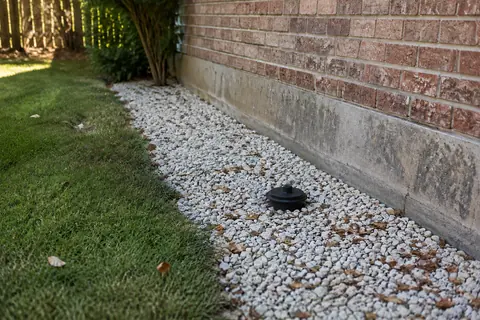
Once water is collected, the system needs a route and discharge arrangement suited to the property. Ask the contractor to identify the outlet, explain the site's available fall, and address relevant local requirements or permissions. Do not assume that burying a pipe creates a destination or that a neighboring low area is available for discharge.
Include the outlet in the plan you keep after installation. Ask how it will remain accessible and what surrounding landscaping or paving must not obstruct it. If the design depends on another existing system, confirm what is known about that system and who is responsible for its condition and future maintenance.
A drain is a water-management component. It does not, by itself, repair damaged wood, resolve every wall leak, or establish the cause of a foundation symptom. If an active plumbing leak is feeding the wet area, that source needs its own evaluation. If water enters through a window or wall detail, another building professional may need to assess it.
Likewise, a drain cannot compensate for every unsuitable grading or discharge arrangement without considering the full site. Ask what conditions must be corrected alongside installation and what is outside the contractor's scope. A clear statement of limits is useful because it prevents the system from being expected to perform a job it was never designed to do.
The outlet also changes what the owner can observe. With a visible discharge point, a homeowner may be able to record its condition from the surface. With a connection into another system, the destination may require records or professional evaluation to understand. Neither arrangement should be guessed from the appearance of the yard. The final installation record should explain which situation applies and where routine access is provided, so a future service call can begin with the known system rather than an excavation to identify it.
Discuss utilities, roots, access, excavation, restoration, and cleaning access before work starts. Ask for a final location record and basic maintenance instructions. Keep photographs taken before the trench is covered if the contractor provides them, together with the outlet location and any component information needed for service.
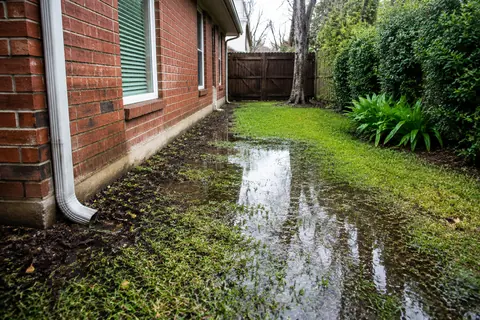
Pro-Tech provides French drain installation for properties in its North Texas service area. Call 972-288-3797 or send the property details for a scheduling call. Describe when the area is wet and share photographs of the observed water route. Those details help the discussion begin with the problem the drain is intended to solve.
Straightforward answers
No. A pipe that carries roof runoff and a drainage assembly that collects water through perforations have different functions. Ask what the actual installation contains and how it is intended to work.
Avoid a universal guarantee. Ask the contractor to explain the intended performance, site limitations, and maintenance needs of the proposed system.
Tell us what you have noticed. We will help you take the next step.
Keep exploring
Relevant services and practical guidance for the questions that come next.
Evaluate the water source, collection points, discharge route and maintenance questions before installation.
Explore this serviceStart with what water needs to be collected and where it can discharge.
Read the guideKnow the route and outlet, preserve access, and report changes in the water pattern.
Read the guideLet's take a closer look
Tell us a little about your property. Our team will contact you to arrange your no-cost initial inspection.
(972) 288-3797Monday to Friday, 8:30 AM to 5:30 PM