Start with the property
Foundation Inspections in North Texas
Understand visible changes, gather useful measurements and discuss the next step for your property.
Explore this service
Understanding the findings
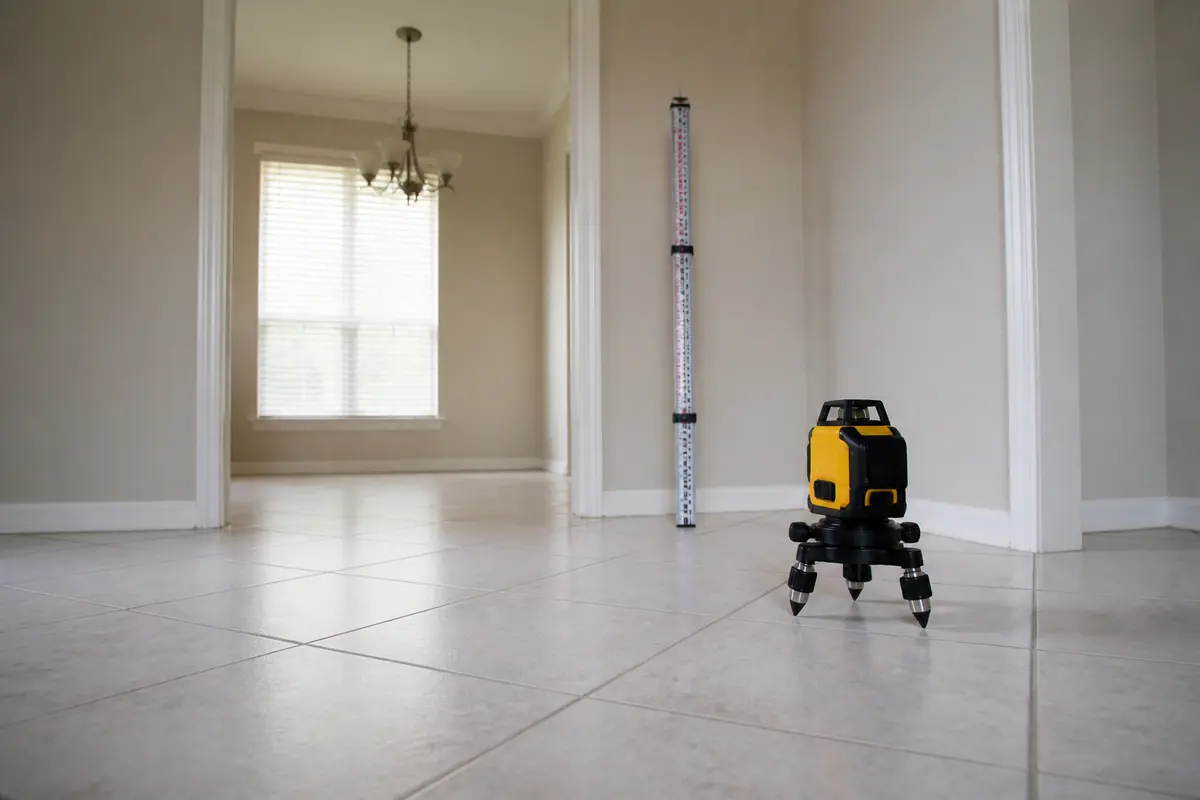
Foundation elevation measurements help describe differences in floor height at selected locations. They are useful information, but they do not explain every cause or automatically show how far a home has moved since it was built. Understanding the reference point, floor surfaces, and available history makes the numbers more meaningful.
Ask the person taking measurements to explain the reference used for the readings. Relative measurements compare locations to a chosen point; a positive or negative number is meaningful only within that method. A plan should make it possible to identify where readings were taken and which areas were not included. Keep the complete drawing rather than copying only the largest difference.
Different floor coverings, steps, additions, and inaccessible rooms can affect the way a plan is prepared or interpreted. Ask how those conditions were handled. The homeowner does not need to learn surveying to read the document, but should be able to connect the marked locations to actual rooms.
Without a suitable earlier baseline, today's floor shape is not a complete history of movement. Original construction variations and later floor changes may be part of what is being measured. The Foundation Performance Association's evaluation guidance discusses using elevation information alongside visible conditions and comparisons over time, rather than treating a single plan as a standalone diagnosis.
This distinction matters when someone points to one number and immediately assigns a repair method. Ask how the proposed explanation accounts for the age of the building, visible symptoms, prior work, and the location of the readings. Numbers can strengthen a reasoned evaluation, but they do not remove the need for one.
An example can clarify why the reference matters. Two plans might both show negative readings in a rear room but use different points as zero. Looking only at the signs would not establish that the room changed between visits. Ask the professional to explain the comparison using the complete plans, their reference information, and any changes in flooring. If the older plan lacks that detail, keep it in the file as historical information while acknowledging the limits of a direct numerical comparison.
If you have an earlier plan, provide the original document and any notes about the instrument, reference, or floor surfaces. A changed reference point, replaced flooring, or a missing room label can complicate a comparison. Ask the professional whether the two sets can be compared reliably and whether the explanation includes any uncertainty.
When follow-up is recommended, agree on what will be recorded and what event should prompt another visit. Keep the related photographs and maintenance history with the readings. A plumbing repair or drainage change between visits belongs in the file because the property conditions did not remain identical simply because the address did.
A useful discussion explains which part of the home is being evaluated, how the readings relate to your concern, and what the limitations mean for the next step. Ask whether the evidence supports monitoring, a defined repair scope, or additional engineering or plumbing work. If more testing is proposed, ask what question that testing is intended to answer.
Pro-Tech's no-cost initial in-person foundation measurements give the team a place to begin that conversation. They do not automatically include every separate professional evaluation or testing service. Call 972-288-3797 or submit your information for a scheduling call, and mention any prior measurement plans so the team knows they are available.
Straightforward answers
No. Cost requires a defined scope, method, access plan, and any associated work. A measurement difference alone does not supply those details.
You can organize them and identify questions, but ask a qualified professional to explain whether references, locations, and floor conditions make them directly comparable.
Tell us what you have noticed. We will help you take the next step.
Keep exploring
Relevant services and practical guidance for the questions that come next.
Understand visible changes, gather useful measurements and discuss the next step for your property.
Explore this serviceMatch the professional and the document to the question you need answered.
Read the guideConsistent locations and dated observations make a simple maintenance record useful.
Read the guideLet's take a closer look
Tell us a little about your property. Our team will contact you to arrange your no-cost initial inspection.
(972) 288-3797Monday to Friday, 8:30 AM to 5:30 PM