Support for concrete slab foundations
Slab Foundation Repair in North Texas
A property-specific approach to slab support, access planning and the questions behind a repair proposal.
Explore this service
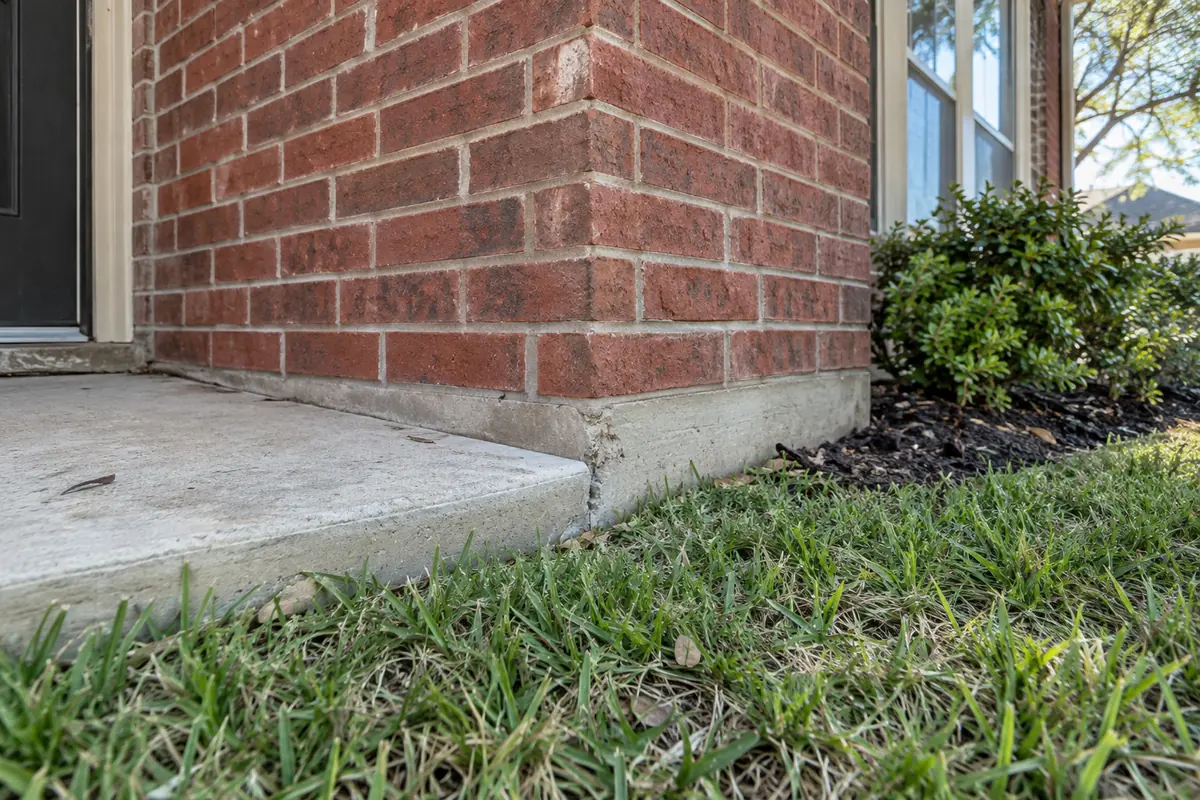
Understanding a broken concrete corner
A cracked or chipped slab corner does not automatically mean your house needs foundation repair. A small piece of concrete can break away where a brick wall meets the foundation without the whole slab settling. The important distinction is whether the damage is confined to that corner or accompanies changes in the surrounding wall, floor, and foundation. That distinction should guide the repair.
The exposed concrete beneath a brick home includes edges and corners that look substantial but are still vulnerable to localized stress. Brick and concrete respond differently to temperature and moisture. Where the brick bonds to the concrete ledge and cannot move as intended, that interaction can break a piece from the corner. Homeowners and inspectors sometimes call this a corner pop.
That explanation is a possibility, not a diagnosis from a photograph. A small triangular piece missing below the first brick course deserves a different investigation from a crack extending along the foundation with visible displacement. The shape helps describe the problem; it does not prove how much concrete is affected or whether the remaining support is adequate.
Start by observing the area from a comfortable standing position. Take one photograph close enough to show the break and another showing the entire corner, nearby windows, and adjoining wall. Record when you first noticed it. If an old photograph shows the same condition, preserve it; a newly discovered defect is not necessarily a newly developed one.
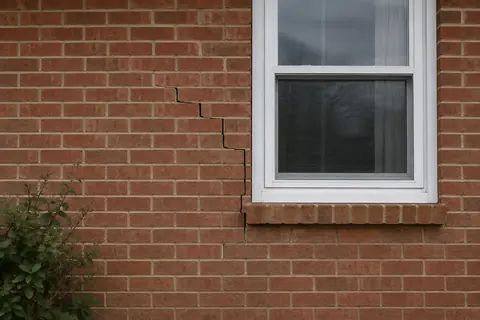
Then describe anything else you have noticed nearby. Is mortar cracking above the corner? Has a door become harder to close? Is there a change in the floor on that side of the house? These observations help an inspector connect the exterior condition with the building as a whole. A corner break by itself and a corner break with several changing symptoms are different starting points.
Avoid prying off concrete, digging beneath the foundation, or removing mortar to see what happens. Those actions can change the condition before it is assessed. If concrete has already fallen away, photograph it without standing beneath loose masonry or reaching into an opening.
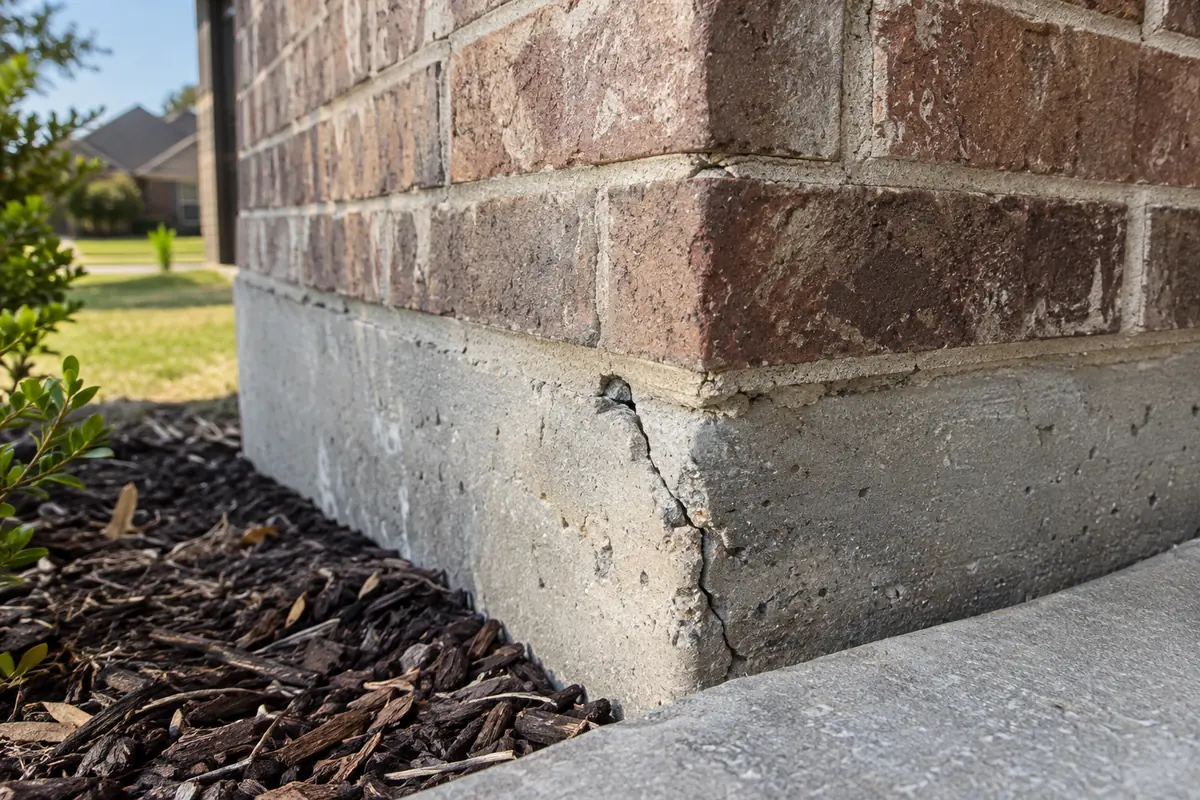
Schedule an evaluation when the damage is spreading, a previously repaired area has broken again, or related symptoms are developing inside the home. Visible displacement, deterioration extending beyond the exposed corner, and concern about the support beneath masonry also warrant a closer look. You do not need to decide beforehand that the slab has moved.
A useful inspection considers accessible conditions and foundation elevation measurements together. Measurements show a profile across the building; they do not turn a particular crack shape into proof of settlement. The inspector should explain whether the corner appears localized, whether there is evidence of a broader support concern, and whether another professional needs to evaluate the concrete or masonry.
If brickwork is visibly loose, bulging, or falling, keep people away from the affected area and arrange prompt professional assessment. That immediate concern is the condition of the wall, regardless of what eventually proves to have caused the concrete damage.
A localized concrete repair may be appropriate when an assessment establishes that the surrounding support is sound. Ask what the repair will accomplish, how the affected surface will be prepared, and whether the brick-to-concrete interaction also needs attention. Restoring the appearance of the corner should follow an explanation of why the material broke away.
If the inspection instead identifies a slab support problem, filling the visible gap does not address that underlying condition. Pro-Tech uses drilled steel-reinforced concrete piers for appropriate slab foundation repairs, with the locations and adjustment guided by the engineering repair plan. That is a different scope from repairing a damaged concrete surface.
The reverse is equally useful when reviewing a proposal: a broken corner alone is not a reason to install piers. Ask the contractor to show the evidence connecting the recommended foundation work to your house. A clear answer should address the surrounding structure, not simply repeat that concrete is cracked.
It is understandable to want the exposed edge looking tidy, especially before painting, landscaping, or listing the home. Take the photographs and arrange any needed evaluation before a patch hides the original condition. Keep the findings with the repair description so a later homeowner or contractor can understand what was addressed.
For a cracked slab corner accompanied by changing symptoms, request Pro-Tech's no-cost initial in-person foundation inspection. Include the full property address and explain what you have seen around that corner. Our team confirms service eligibility in our North Texas service area and contacts you to arrange the visit.
Straightforward answers
No. The decision depends on whether the assessment identifies a support problem. Localized concrete damage and foundation movement can require very different repairs.
Size alone is not enough. The depth and extent of the damage, nearby masonry support, related symptoms, and the building's condition all matter. Describe what you see and have uncertain conditions evaluated.
Tell us what you have noticed. We will help you take the next step.
Keep exploring
Relevant services and practical guidance for the questions that come next.
A property-specific approach to slab support, access planning and the questions behind a repair proposal.
Explore this serviceLook at patterns and changes together before drawing conclusions from a single crack.
Read the guideA stepped mortar crack deserves context, including its location, history, and nearby openings.
Read the guideAsk for the reasoning, limits, and next step before making a repair decision.
Read the guideLet's take a closer look
Tell us a little about your property. Our team will contact you to arrange your no-cost initial inspection.
(972) 288-3797Monday to Friday, 8:30 AM to 5:30 PM