Support for concrete slab foundations
Slab Foundation Repair in North Texas
A property-specific approach to slab support, access planning and the questions behind a repair proposal.
Explore this service
Soil and the home
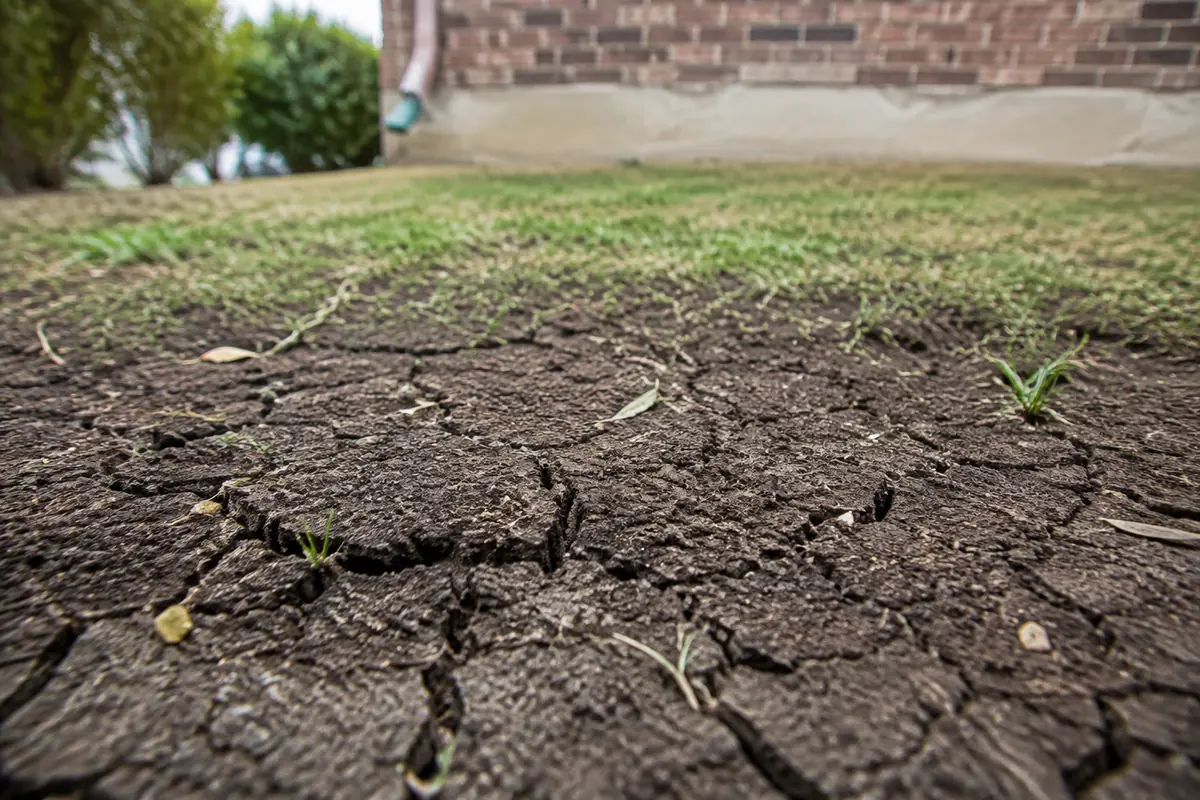
Some clay minerals change volume as their moisture content changes, which is why soil and water belong in North Texas foundation conversations. That general behavior does not tell you the condition of an individual home. A useful review connects the property's visible symptoms, measurements, water history, and construction rather than relying on the word 'clay' alone.
The U.S. Geological Survey describes expansive soils as materials that can swell or shrink with changes in moisture. Its clay guidance also explains that some clay minerals expand when they take up water and that this process can reverse. This is background for understanding why changes in soil moisture may matter to building performance.
Not every soil has the same properties, and a regional description is not a geotechnical report for your lot. Fill, drainage, vegetation, prior work, and the building itself can make property conditions more complicated. If a technical soil question needs to be resolved, ask whether a qualified geotechnical professional should be involved.
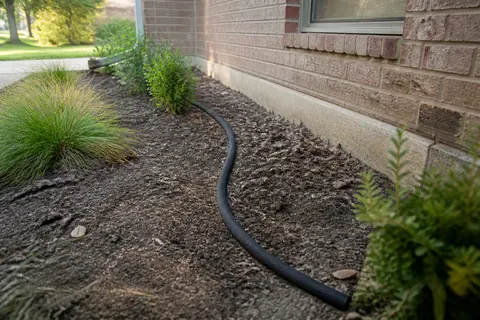
Record where water collects, where downspouts discharge, and whether irrigation leaves one area persistently wet. Also note visible ground changes during dry weather. Keep those observations separate from cracks, door changes, and floor concerns so the inspector can decide how the information fits together.
A soil gap beside a house or a dry patch in the yard does not prove how the foundation has moved. Likewise, a wet planting bed does not establish the complete cause of a nearby wall crack. The purpose of the record is to give the review concrete information, not to make a diagnosis before measurements and other conditions are considered.
Do not assume the answer is to saturate the perimeter, remove a mature tree, or install a drain wherever the ground looks different. Each action changes the site and should have a defined purpose. Ask how the proposed step addresses the observed condition and whether it needs coordination with an arborist, plumber, engineer, or drainage professional.
If watering is discussed, ask for property-specific guidance and confirm current local water-use rules with the utility. If drainage is discussed, ask where collected water will discharge. A maintenance plan should account for how the whole area behaves rather than treating one visible symptom in isolation.
Regional soil context is most useful when it changes the questions in the inspection, not when it supplies an automatic answer. Two properties can share a general soil description while one has a downspout concentrated at a corner and another has a different water route. That visible difference deserves investigation in its own right. A property record that identifies those conditions gives the professional more useful information than assuming neighboring houses must have the same movement pattern or need the same support arrangement.
Ask the inspector what evidence supports the explanation for your home and what information remains uncertain. If repair is recommended, ask how the scope relates to the findings and whether site maintenance or another service is also needed. The general existence of expansive soil is not a complete repair plan or a reason to skip a property review.
Pro-Tech has served North Texas since 1993 and offers no-cost initial in-person foundation measurements. Call 972-288-3797 or send the property details for a scheduling call. Bring records of earlier foundation, drainage, and plumbing work so the conversation can account for what has already changed at the site.
Straightforward answers
No. Soil behavior is one part of the context. The actual building condition and property-specific findings should determine the next step.
A map can provide regional background, but it does not establish the condition of concealed components or explain the symptoms at a particular home.
Tell us what you have noticed. We will help you take the next step.
Keep exploring
Relevant services and practical guidance for the questions that come next.
A property-specific approach to slab support, access planning and the questions behind a repair proposal.
Explore this serviceDocument the timing and pattern without assuming drought explains every new symptom.
Read the guideA watering schedule should follow site conditions and current local rules.
Read the guideLet's take a closer look
Tell us a little about your property. Our team will contact you to arrange your no-cost initial inspection.
(972) 288-3797Monday to Friday, 8:30 AM to 5:30 PM