A practical plan for your home
Residential Foundation Repair
Understand the repair recommendation and plan around rooms, occupants, prior work and restoration.
Explore this service
Water management
A universal foundation watering schedule cannot account for every property's soil, shade, rainfall, irrigation, and drainage. Before adding water around the house, ask what problem the plan is intended to address and how it will be checked. More water is not automatically a better response to a crack or a dry-looking patch of soil.
Is the concern a change in landscape irrigation, a dry area near the house, a tree-care issue, or a foundation symptom? Those questions may overlap, but they should not be treated as identical. Ask the professional to explain the purpose of the recommendation and what evidence from your property supports it.
USGS guidance provides background on moisture-related volume changes in expansive soils. It does not supply a custom irrigation prescription for your address. A maintenance conversation should connect that background with the site's actual conditions and should not promise that watering will reverse a particular building change or remove the need for an inspection.
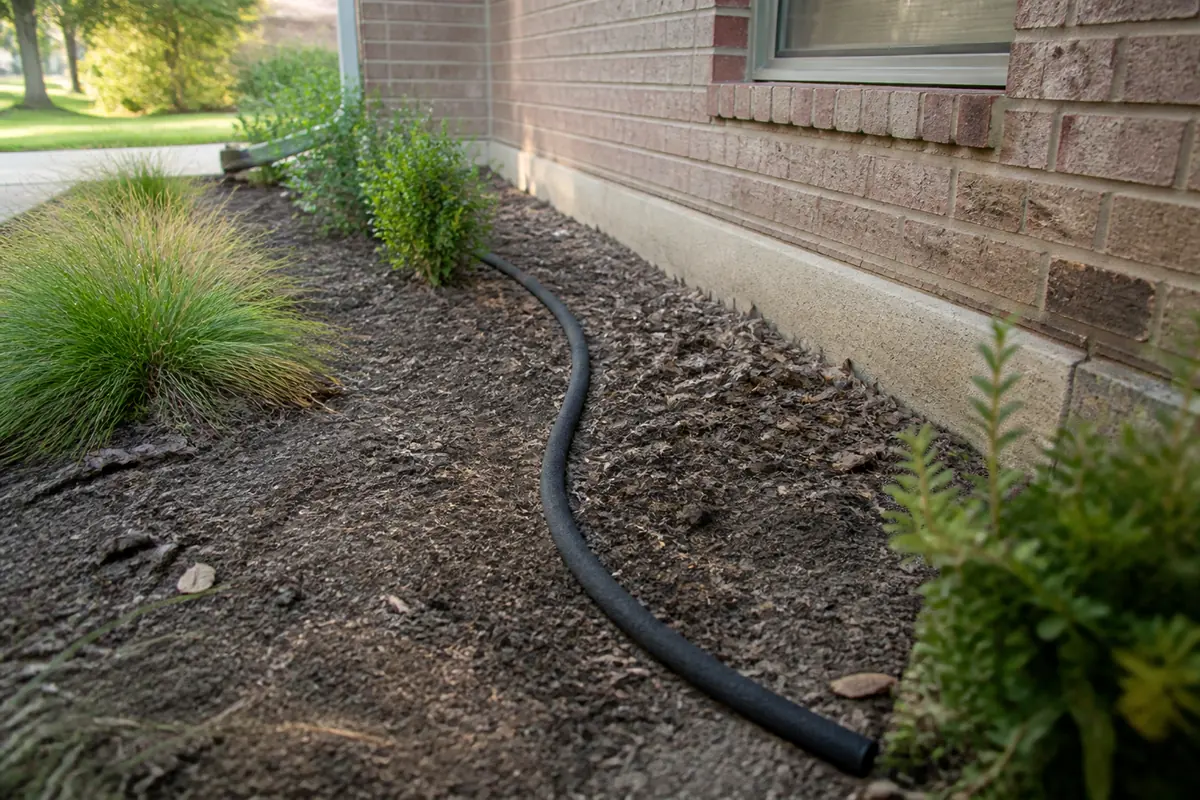
Describe the current irrigation zones, recent controller changes, roof runoff, shaded beds, and areas that stay wet. Note whether a hose or sprinkler delivers water unevenly or whether runoff leaves the intended area. If a zone has been shut off or repaired, include the date. These facts are more useful than guessing how much water reaches the soil around the whole house.
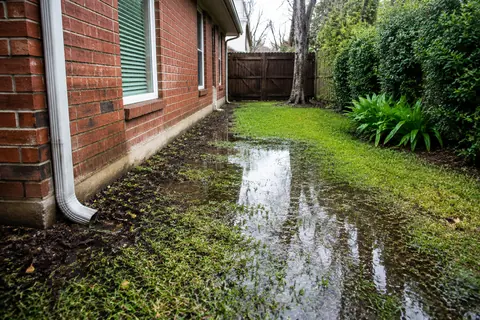
Check for suspected leaks through the appropriate plumbing or irrigation professional. A persistent wet patch should not be treated as successful watering until its source is understood. Likewise, adding a new routine without considering drainage can leave one part of the site receiving water it cannot manage effectively.
Water-use restrictions can change, so verify the current requirements directly with your city or water utility before setting a schedule. Do not rely on another city's rules or a neighbor's recollection. Ask whether any proposed method is permitted and how restrictions apply to the property at the time you intend to use it.
Where tree care is involved, seek guidance appropriate to the tree and site. Texas A&M Forest Service's drought-watering guidance emphasizes checking local restrictions and assessing conditions. A tree's needs and a foundation maintenance discussion should be coordinated rather than collapsed into one fixed hose routine for every part of the yard.
A useful watering record describes changes you control: which zone was adjusted, when a broken head was repaired, or when a previously watered bed was disconnected. It does not need to claim an exact soil moisture value you have not measured appropriately. If a professional later revises the maintenance plan, retain both the earlier routine and the date of the revision. That gives future observations a meaningful timeline and avoids treating the property's water conditions as constant when the routine actually changed.
Ask what observations should lead you to reduce, stop, or reconsider the watering approach. Discuss runoff, persistent saturation, leaks, and new building symptoms as reasons to seek further advice. Keep a simple record of meaningful changes to irrigation so future foundation or drainage reviews can account for them.
If the reason you are considering watering is a new crack, floor change, or sticking opening, arrange an evaluation of that concern. Pro-Tech offers no-cost initial in-person foundation measurements. Call 972-288-3797 or send the property details for a scheduling call, and explain both the building symptom and the current water-management setup.
Straightforward answers
This article does not prescribe a universal duration. Ask for guidance based on the actual site, delivery method, weather, and current utility rules.
Do not assume a particular building response. Document the crack and have the concern evaluated rather than using watering as a test of whether repair is needed.
Tell us what you have noticed. We will help you take the next step.
Keep exploring
Relevant services and practical guidance for the questions that come next.
Understand the repair recommendation and plan around rooms, occupants, prior work and restoration.
Explore this serviceDocument the timing and pattern without assuming drought explains every new symptom.
Read the guideStart with the source and destination of the water, not a drain product.
Read the guideLet's take a closer look
Tell us a little about your property. Our team will contact you to arrange your no-cost initial inspection.
(972) 288-3797Monday to Friday, 8:30 AM to 5:30 PM