Start with the property
Foundation Inspections in North Texas
Understand visible changes, gather useful measurements and discuss the next step for your property.
Explore this service
Inside your home
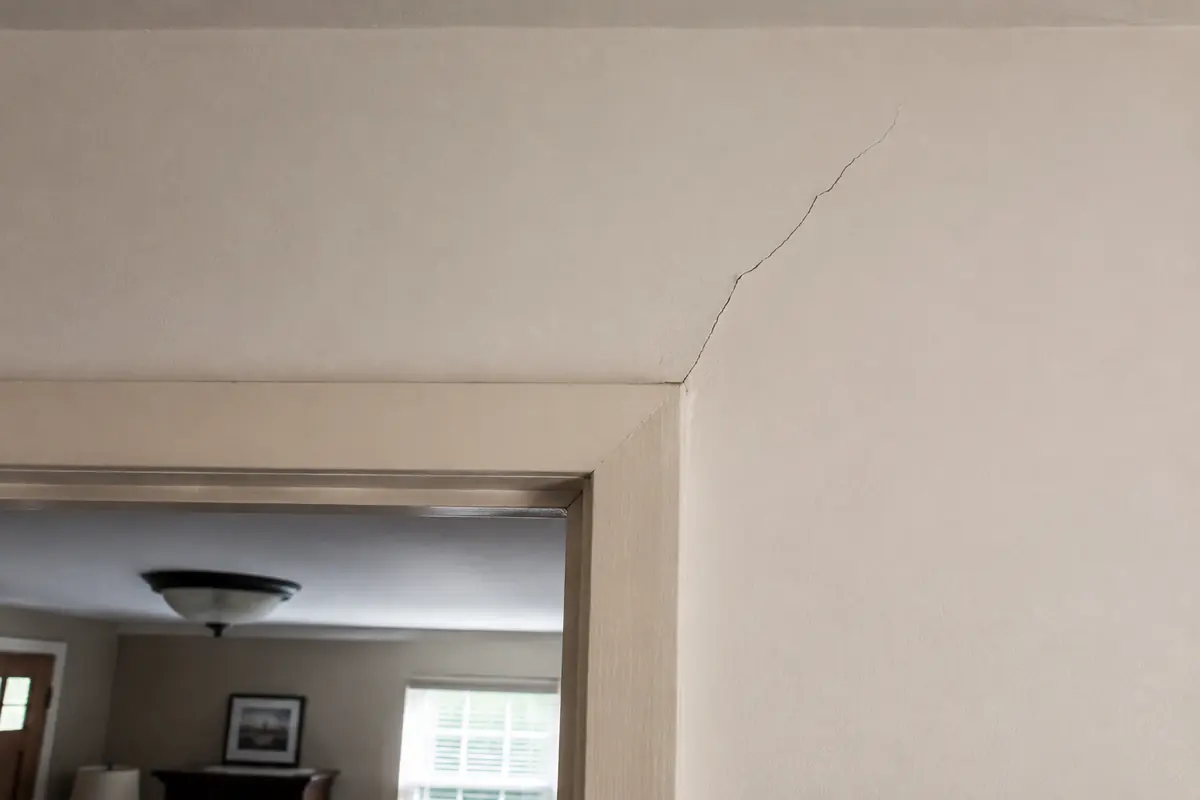
Drywall cracks can come from more than one kind of building change. A line near a ceiling, a repaired seam that opens again, and a diagonal crack beside a door deserve different questions. The useful next step is to document the condition and compare it with the room and the home's history before deciding what needs repair.
Start with the location: wall or ceiling, near an opening or in the middle of a surface, along a straight seam or across an uninterrupted area. Note whether the line appears only in paint or whether there is a visible opening beneath it. You do not need to remove paint, cut drywall, or probe the wall. A close photograph and a room photograph preserve useful information without changing the condition.
Use the same room names in your notes and photographs. 'Hall outside the laundry room' is much easier to match during an inspection than a series of unlabeled close-ups. If there are several cracks, number them on a simple hand-drawn floor plan.
Was the room recently remodeled? Did the crack appear after a patch or return along an older repair? Has the ceiling been opened for plumbing or electrical work? These questions help explain which materials have changed and when. A recurring line is worth documenting, but recurrence alone does not identify the underlying cause.
If you have invoices, keep the description of the work with your photographs. A note that says 'ceiling repaired after upstairs leak' gives the inspector information that paint color cannot provide. When previous work was done before you owned the home, distinguish the seller's description from records you can actually supply.
A practical way to organize several interior cracks is to give each one its own history. For instance, a ceiling seam repaired during a bathroom renovation should not be grouped automatically with a newer wall crack by the front door. List the repair date and location for the ceiling, then record the separate discovery date for the wall. During the appointment, ask whether the two conditions share a meaningful pattern. Keeping the records separate helps avoid a broad explanation that does not account for the actual surfaces and work history.
Discoloration, dampness, soft finishes, or an active drip call for attention to the water source. EPA moisture guidance emphasizes finding and managing moisture rather than simply covering the affected surface. Tell the appropriate plumbing, roofing, or building professional what you see, and share the same information at the foundation appointment if there are also movement concerns.
Do not assume a damp crack is caused by the foundation, and do not assume a dry crack rules out every other problem. Describe the actual observation. If a ceiling is bulging or shedding material, keep the area clear and arrange prompt qualified help instead of standing underneath it to inspect more closely.
A review becomes more useful when you can explain whether nearby doors, windows, or floors have changed too. Ask the inspector how those observations relate to measurements and whether the evidence supports additional evaluation, monitoring, or a repair discussion. If the explanation is uncertain, ask what missing information would resolve the uncertainty rather than accepting a repair label without context.
Before scheduling paint and texture work, ask which visible areas should remain available for inspection. Save dated images if repairs must proceed sooner. Pro-Tech provides no-cost initial in-person foundation measurements, with the team calling to schedule after you share the property details. You can also reach the Mesquite team at 972-288-3797.
Straightforward answers
No single direction establishes the cause. Its history, the wall construction, nearby conditions, and the broader inspection findings should be considered together.
You can keep dated photographs and notes. Ask a qualified professional whether monitoring is appropriate, what changes should trigger a call, and whether any concern needs attention sooner.
Tell us what you have noticed. We will help you take the next step.
Keep exploring
Relevant services and practical guidance for the questions that come next.
Understand visible changes, gather useful measurements and discuss the next step for your property.
Explore this serviceHow an opening behaves, and what changed nearby, helps guide the next question.
Read the guideAgree on the sequence with the foundation and finish contractors before booking paint and patch work.
Read the guideLet's take a closer look
Tell us a little about your property. Our team will contact you to arrange your no-cost initial inspection.
(972) 288-3797Monday to Friday, 8:30 AM to 5:30 PM