Start with the property
Foundation Inspections in North Texas
Understand visible changes, gather useful measurements and discuss the next step for your property.
Explore this service
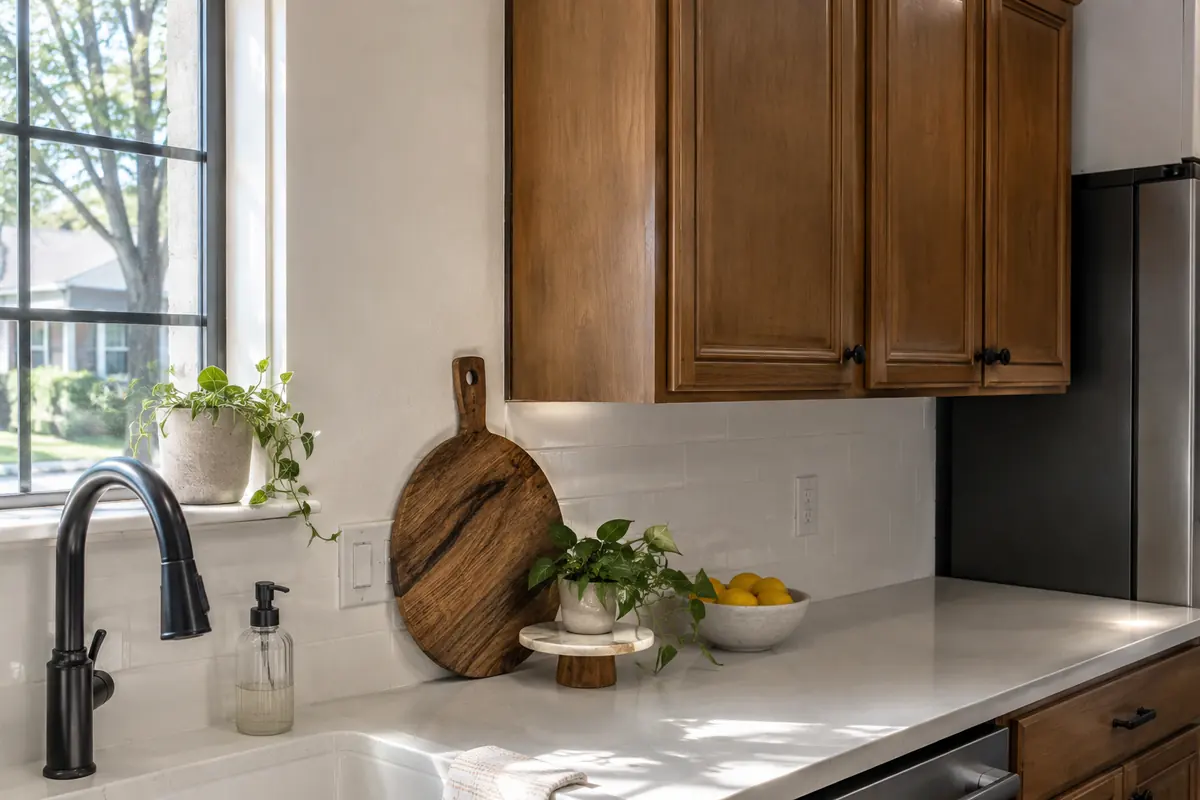
Follow the gap to the right repair
Call a cabinet professional promptly if a wall cabinet is loosening or pulling away from its mounting. A foundation inspection becomes especially useful when cabinet gaps appear alongside changing floors, sticking doors, or wall cracks. A narrow separation in caulk alone is a different concern. Before choosing a contractor, identify whether you are seeing a failed finish joint, a moving cabinet, or a larger change in the room.
People use the phrase cabinets separating from the wall for several conditions. A wall-mounted cabinet may be pulling forward. A base cabinet or countertop may have a gap behind it. Or the only visible change may be a split line of paint or caulk where trim meets the wall. Those descriptions lead to different inspections.
From a safe position, note the exact location: above a wall cabinet, behind a countertop, along a backsplash, or between two cabinet boxes. Describe whether the gap runs along the entire cabinet or is concentrated at one end. Photographs that include the room are more useful than a close-up with no location reference.
Do not tug on the cabinet to test its strength. If a mounted cabinet visibly sags, its fastenings are pulling out, or it seems unstable, keep people away and stop using it until a qualified professional assesses and secures it. The need to address a loose cabinet does not depend on first proving a foundation problem.
If the concern is limited to a recently installed cabinet, start by contacting the installer or a qualified cabinet professional. Have them check the cabinet, attachment, supporting wall, and installation details. Tell them if you have changed what is stored in it or had nearby work completed. Foundation piers would not correct an inadequate cabinet connection.
Wood can change dimensions as its moisture content changes. Finish joints can also separate without the foundation moving. A carpenter may therefore find a trim or cabinet issue even when a gap looks dramatic against fresh paint. Conversely, repeatedly caulking the same joint without understanding what is changing can hide useful evidence.
A gap near a sink or dishwasher deserves attention to moisture as well. Describe staining, swelling, dampness, or a recent leak separately from the gap itself. A plumber or another appropriate trade may need to investigate that source. The observation should guide the next step rather than automatically send every kitchen problem to a foundation contractor.
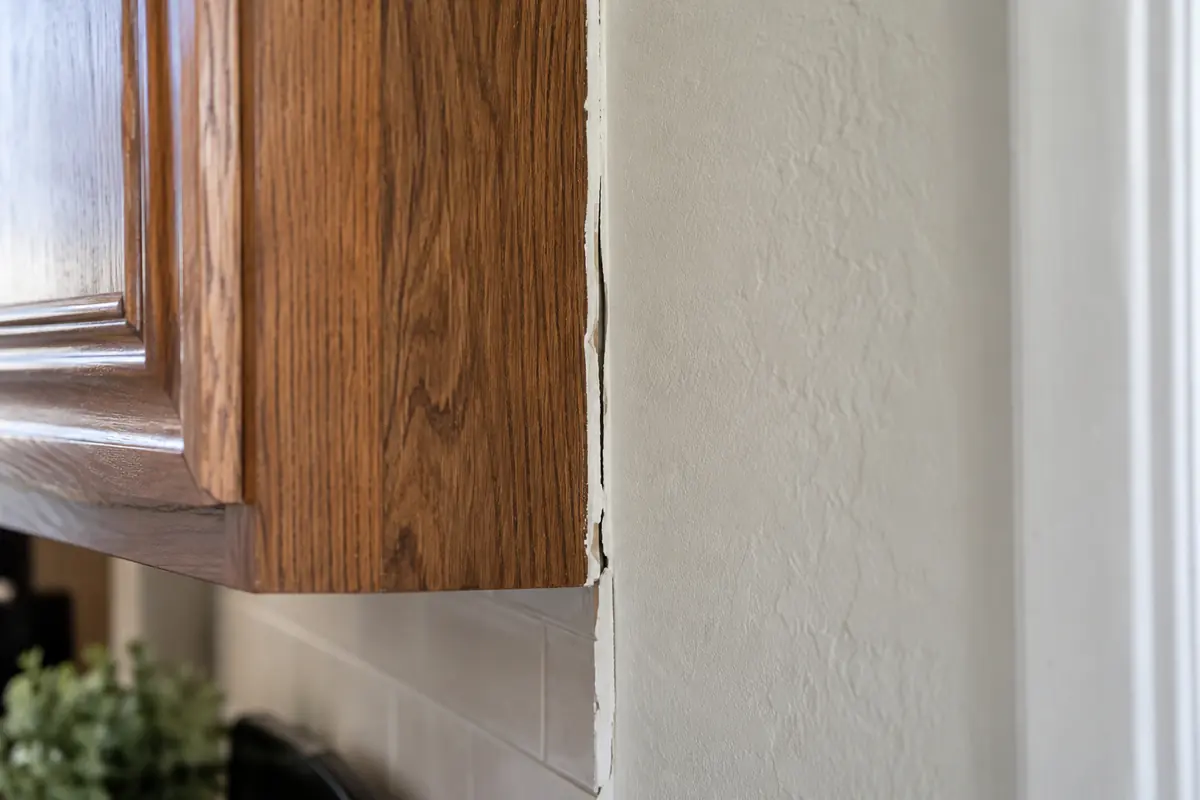
A foundation evaluation is worth arranging when several parts of the same area are changing. Perhaps a countertop gap has opened while the nearby doorway has begun binding, or a wall crack has appeared near a floor that feels different. These combinations do not prove the foundation needs repair, but they justify considering more than the cabinet installation.
Look for a pattern through ordinary use of the home. Are the changes confined to the remodeled kitchen, or do they continue into the hall? Did you first notice them together, or years apart? Has an addition or earlier foundation repair changed the layout? The answers help the inspection focus on the property rather than a single finish line.
Avoid using the width of the cabinet gap as a repair threshold. An installation gap can be large, and a developing structural concern can initially look small. The history, other symptoms, and accessible measurements supply context that a ruler beside one joint cannot provide.
A kitchen can have a local cabinet defect and a foundation concern at the same time. A cabinet professional can address unsafe attachment while a foundation contractor evaluates the wider building. Treat those as coordinated tasks, with each contractor explaining what was inspected and what remains outside the scope.
If foundation work is recommended, ask how it affects the timing of permanent cabinet alignment, countertop work, backsplash repairs, and painting. Do not assume leveling will reattach a loose cabinet or close every visible joint. Equally, do not authorize a full kitchen refit solely because someone has suggested possible foundation movement.
A useful proposal ties the recommended work to specific findings. For the cabinet, that means the parts and connections needing attention. For the foundation, it means the observed condition and planned support work. Clear boundaries help you avoid paying two contractors to solve different versions of an undefined problem.
Keep installation dates, renovation photographs, leak-repair records, and any earlier foundation documents together. A brief note such as gap first noticed beside the refrigerator in September is useful. You do not need to remove trim, empty the entire kitchen, or uncover hidden framing before asking for help.
If the separation comes with other changing symptoms, request Pro-Tech's no-cost initial in-person foundation inspection. Share the complete property address and the rooms involved. The team confirms coverage within our North Texas service area and contacts you to arrange an appointment. That visit can help clarify whether the foundation belongs in the repair plan.
Straightforward answers
Not necessarily. Cabinet installation, wall shape, finish movement, moisture, and broader building movement are different possibilities. Related symptoms and an on-site assessment help establish what needs attention.
Document it first and leave it visible if practical until the relevant professional has reviewed it. An unstable cabinet needs prompt attention; cosmetic caulking should not substitute for checking its attachment.
Tell us what you have noticed. We will help you take the next step.
Keep exploring
Relevant services and practical guidance for the questions that come next.
Understand visible changes, gather useful measurements and discuss the next step for your property.
Explore this serviceRecord where a gap occurs and what changed before choosing a repair.
Read the guideA plumber's findings and a foundation review answer different parts of the property question.
Read the guideAgree on the sequence with the foundation and finish contractors before booking paint and patch work.
Read the guideLet's take a closer look
Tell us a little about your property. Our team will contact you to arrange your no-cost initial inspection.
(972) 288-3797Monday to Friday, 8:30 AM to 5:30 PM